| 1 |
What is aseptic cold filling and why is it better for juice and milk? |
Aseptic cold filling means the liquid and packaging are sterilized separately, then filled and sealed in a sterile environment at room temperature (20–25°C). It is better for juice and milk because it preserves natural flavor, color, and nutrients without using heat, while allowing shelf-stable storage without refrigeration. |
| 2 |
What products can be filled with aseptic cold filling? (juice, milk, dairy, tea) |
Aseptic cold filling can be used for juice, milk, dairy products, tea, and other sensitive liquids. |
| 3 |
Does aseptic filling allow products to be sold without refrigeration? |
Yes, aseptic filling allows products to be sold without refrigeration. The sterile filling process and packaging enable shelf-stable storage for several months at room temperature. |
| 4 |
What is the shelf life extension achieved by aseptic cold filling? |
Aseptic cold filling extends the shelf life by 6 months compared to hot filling. |
| 5 |
What sterilization method does your aseptic filling machine use? |
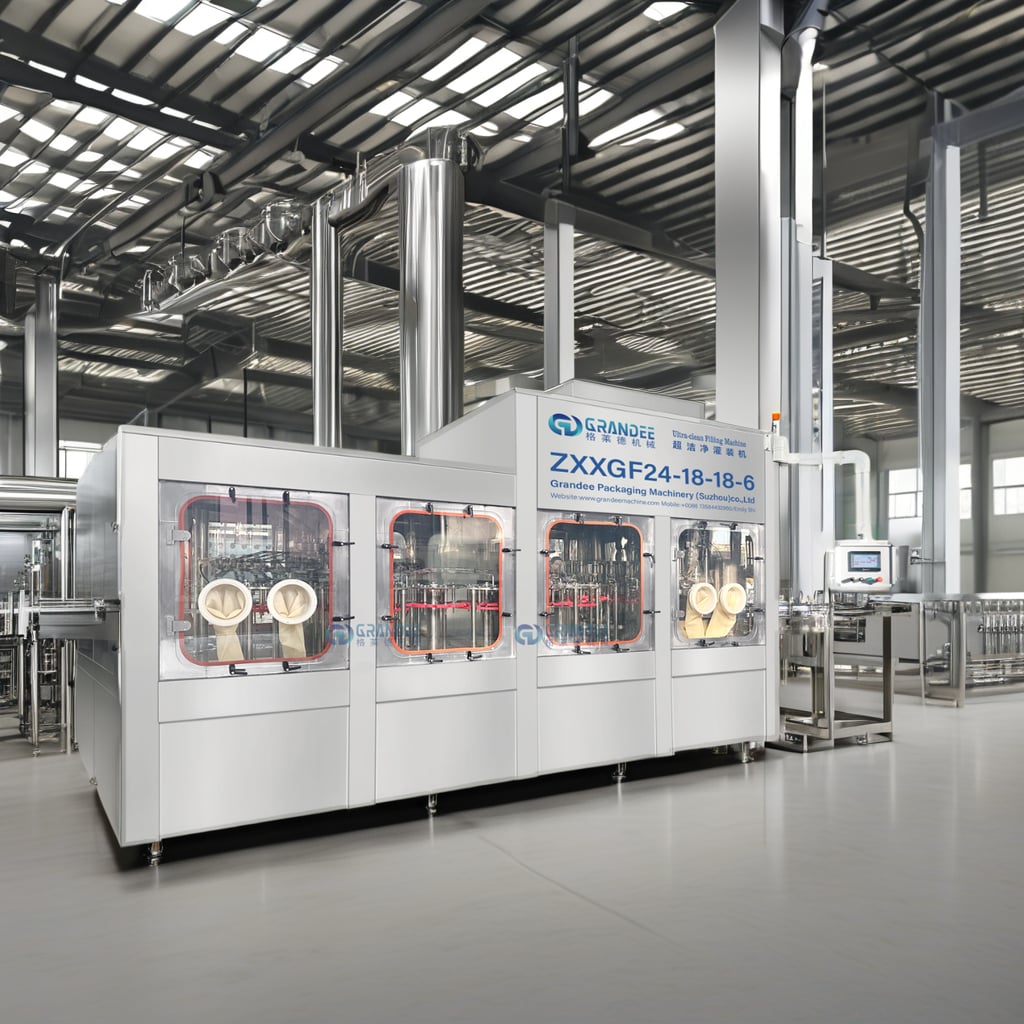
Our aseptic filling machine uses vaporized hydrogen peroxide (VHP) for container sterilization and steel sterilization for the filling environment. |
| 6 |
What are the hygiene room (clean room) requirements for installation? |
The machine must be installed in a Class 100 (ISO 5) clean room environment for the filling zone, with the surrounding area at Class 10,000 (ISO 7) . Positive air pressure and HEPA filtration are required. |
| 7 |
What bottle types are compatible — PET only or also HDPE and glass? |
PET, HDPE, and glass all compatible |
| 8 |
What is the minimum viable production capacity for aseptic filling? |
3000BPH for small-scale aseptic lines. |
| 9 |
How does the cost of aseptic filling compare to hot-fill? |
While the initial equipment investment for aseptic filling is 20–30% higher than hot-fill, the per-bottle cost is often lower due to lighter-weight PET bottles, energy savings (no cooling tunnel), and higher production speeds. |
| 10 |
Do you provide training for operating the aseptic filling system? |
Yes, we provide on-site training for your operators and maintenance team. The training covers machine operation, cleaning (CIP/SIP), basic troubleshooting, and safety procedures. Training manuals and video guides are included. |
 EN
EN
 AR
AR CS
CS DA
DA NL
NL FR
FR DE
DE HI
HI IT
IT JA
JA KO
KO NO
NO PL
PL PT
PT RU
RU ES
ES TL
TL ID
ID SK
SK VI
VI SQ
SQ TH
TH TR
TR MS
MS GA
GA MK
MK HY
HY AZ
AZ KA
KA HT
HT LO
LO LA
LA MN
MN NE
NE SO
SO MY
MY KK
KK UZ
UZ KY
KY SM
SM